February is not a warming month, and Ireland went ten days this month without sunshine. All the same it’s the beginning of spring. In the lanes I started to see ewes lambing. The pond is filling up with frogspawn. There’s early veg and seeds to plant. I could start to dig again.
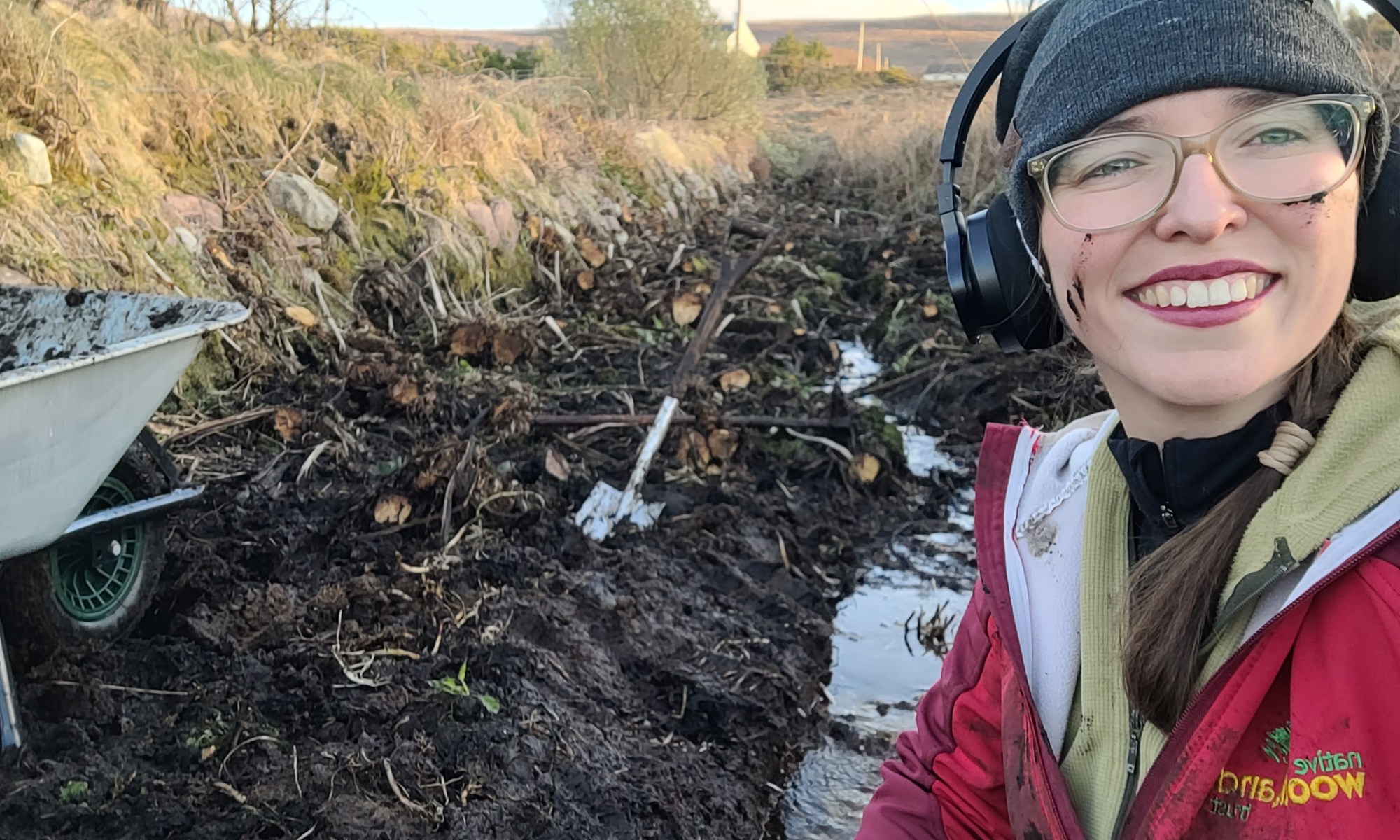
Anyone following my work through videos over on TikTok or Instagram has probably already seen the start of my first project of the year; the restoration of an old ditch pathway and drain. I’ve talked in videos about the old earth embankments and stone walls. The embankments edge the stream as well as the field are dense earth and stone walls that I hope to protect from erosion.
An older neighbour first let me know that the deep ditch between fields had once contained a pathway from the high road on our hill down toward our row of houses and on into the valley. While some claim it was for cattle, I couldn’t help but notice how lined up with an old coffin path. Coffin paths were traditional routes that Irish rural communities used to carry coffins from the wakes to the graveyards for burial. In Achill there was a long path from Keel (Caol) to Kildownet (Chill Damhnait from Damhnait, the Irish form for St Dymphna). When we moved in, several people in the village told us that the ruined house next door was haunted or attracted fairies because the land commission built on top of one of the coffins rests where the pallbearers laid the coffin down on their journey.
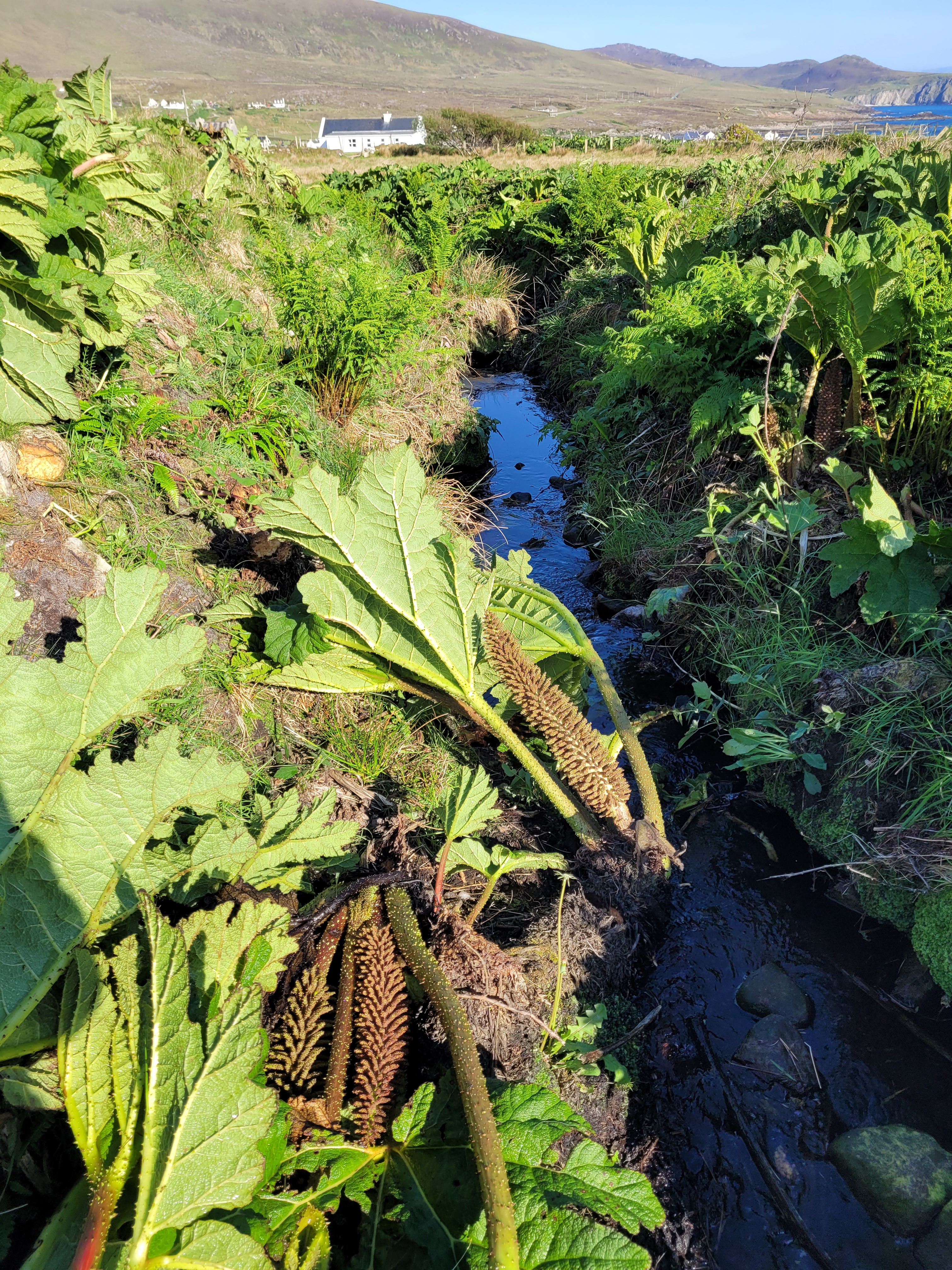
The main thing damaging this old ditch and the potential path is an invasive species common in the west of Ireland called gunnera. It is also referred to as giant rhubarb because of the shape of the leaves. Its seeds spread very effectively in water so in landscapes like the west of Ireland, with a high water table and lots of small streams, it becomes invasive quickly. It can be hard to remove and resistant to herbicide. Even if it was more effective, using herbicide is risky since its often on water courses. Contamination is very easy.
Digging in the winter in these areas is difficult since it can be so liquid and muddy that there is a lot of risk of slippage. Even digging gunnera roots out of the flattest section of the ditch created a risk of thing. I sowed some wild white clover to try and create a walkable surface for the pathway while other grasses and wildflowers to get established. It might still be dark, with a bite to the wind, but life is getting started underneath.
 Orla ní Dhúill