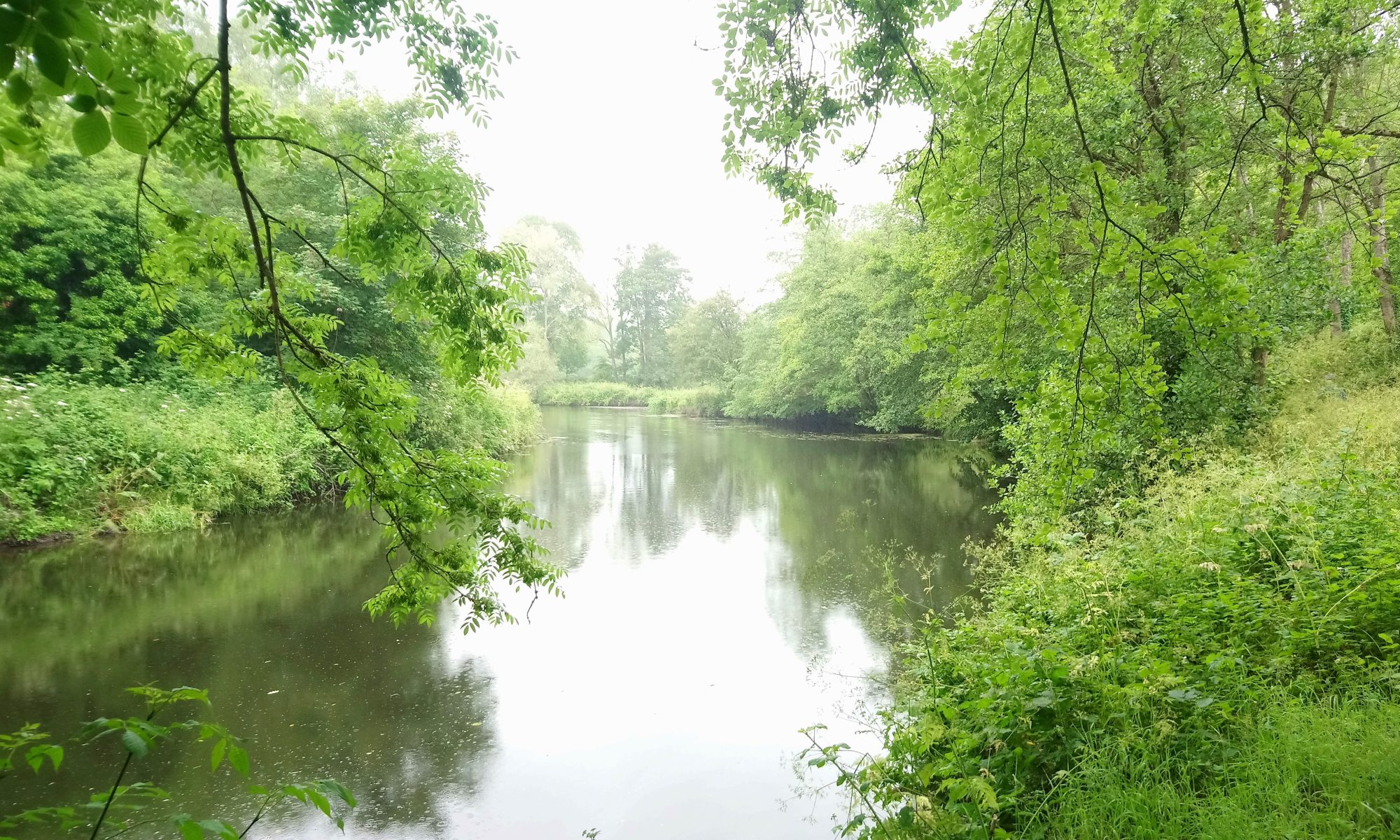

“Sheer three-dimensionality is perhaps the most arresting aspect of an Irish rainforest, as though a living ecosystem had contrived to pack the maximum quantity of spatial strata into the smallest volume possible and succeeded to the wildest degree.”
-The Magic of an Irish Rainforest by Eoghan Daltun
The Glen of the Downs is an oak-woodland in north Wicklow and was one of the first set of nature reserves designated in 1980. The key area of old sessile oak is 43.8 hectares or 108 acres, protected as a special area of conservation (SAC) under the Habitat Directive. Recent work by Roche and Doherty in the Irish Naturalists Journal argues that the woodland was already well established in 1529, classifying it as ancient woodland. These factors together make it one of Ireland’s most significant woodlands for conservation, despite road works destroying a strip along what is now the N11.
On the 8th of October, the Irish Environmental Network wrote to minister Malcolm Noonan to ask that the government buy a parcel of land currently for sale beside Glen of the Downs. The letter was sent on behalf of the networks members, environmental NGOs like An Taisce, the Irish Wildlife Trust, the Native Woodland Trust, and ReWild Wicklow. The land for sale is 197 acres at Kindlestown Road Upper, Bellevue and would connect the Glen of the Downs with another woodland, Kindlestown Woods as well as more than doubling the size of the existing nature reserve.
The asking price currently listed is 6.5 million euro. Budget 2025, as recently published, aims to set aside 92 million in capital funding for heritage within the budget for the Department of Housing, Local Government and Heritage, of which Malcolm Noonan is junior minister. The estate agent involved has said that the owner in the sale is open to the idea of state purchase and TD for Wicklow Jennifer Whitmore began a petition to rouse public support for the idea.

As well as the particularly significant population of sessile or Irish oaks, Glen of the Downs contains a range of woodland shrubs, wildflowers, ferns, and fungi. Such as Great Wood-rush, Bilberry, Wood Sage, and ferns like the Soft Shield-fern. Along the alluvial soil at the stream you can find ash, hazel, and a species-rich herb layer that includes Ramsons, Dog Violets, and Bluebells. A breeding bird census carried out in 1990 recorded a total of 21 species holding territory. Wren, Robin, Blue Tit, Chaffinch and Great Tit were the most abundant species. Blackcap and Jay also breed, and the rare Wood Warbler has been recorded. Grey Wagtail breeds along the stream.

Kindlestown Wood is also in state ownership, as a Coilte property with public access and a walking trail. There are some old oak and ash examples here though as a former part of the Bellevue Estate, even before Coillte management, it has more introduced and invasive species than Glen of the Downs.

The argument in favour of the expansion of the Glen of the Downs is that it allows for natural regeneration from an ancient site, which studies show is how the healthiest and most robust woodlands develop. It is the approach supported by National Parks and Wildlife (NPWS), the agency who would take over responsibility for the site should it be bought and added to the reserve. It would also contribute to Ireland’s legal obligations under the EU Habitats Directive and the new Nature Restoration Law. Old oak woodlands are an extremely rare habitat in Ireland today. As discussed in the last episode, the Nature Restoration Law calls for some fairly dramatic improvements in just five years. Ireland was previously been fined millions of euro for failing to meet binding environmental targets, which could be a justification for the expense for 6.5million as a one off payment.
The statement also said that “the purchase of the lands should be part of a much broader landscape-based approach to nature restoration that looks to utilise the existing network of Natura 2000 sites, public lands and supportive private landowners in East Wicklow to re-connect remnant ancient woodlands across the hills and foothills of the Wicklow Mountains from Knocksink Woods in the North to Glendalough and the Devils Glen in the South.”
There is a history of environmental activism at Glen of the Downs. From 1997 to 2000 an encampment of protesters set up in the valley where the road would ultimately be widened into the now N11. The eco-warriors, as they called themselves, did win some concessions in court despite ultimately losing overall. I visited the camp more than once as a child, pretty enamoured with the whole thing and that biases me, of course. I remember thinking at the time that it was a bit like a Robin Hood camp, which made reading Jenni Roche and Terry Doherty’s article in Irish Naturalist particularly fun. They note that a list of “dangerous wooded passes” from 1529 listed a “Downe, Callibre” an anglicisation of Dún Callighe Béirre, meaning the fort of the witch or hag of Beara, which is now Glen of the Downs. There’s a rich cultural history as well as an ecological one that deserves more than to be relegated to something people drive past at 80km an hour.

Chapter 9 sources
Corr, Shauna (8 October 2024) ‘Government urged to buy Wicklow plot to double the size of rare oak wood’ The Daily Mirror
Irish Environmental Network (8 October 2024) ‘Environmental NGOs urge Government to buy lands beside the Glen of the Downs nature reserve’
Libreri, Samantha (8 October 2024) ‘Glen of the Downs site could be doubled with land purchase, say campaigners’ RTÉ
NPWS (2020) ‘Conservation Objectives: Glen of the Downs SAC 000719. Version 1’ National Parks and Wildlife Service, Department of Housing, Local Government and Heritage
Roche, Jenni & Doherty, Terry (2023) ‘Historical records provide evidence of ancient woodland at the Glen of the Downs, Co. Wicklow’ The Irish Naturalists Journal Vol. 40 pg. 65-69
Scott Cawley Ltd (2020) ‘Habitat identification and evaluation for Glen of the Downs SAC’ ARUP
Whitmore, Jennifer (2024) Petition
 Orla ní Dhúill