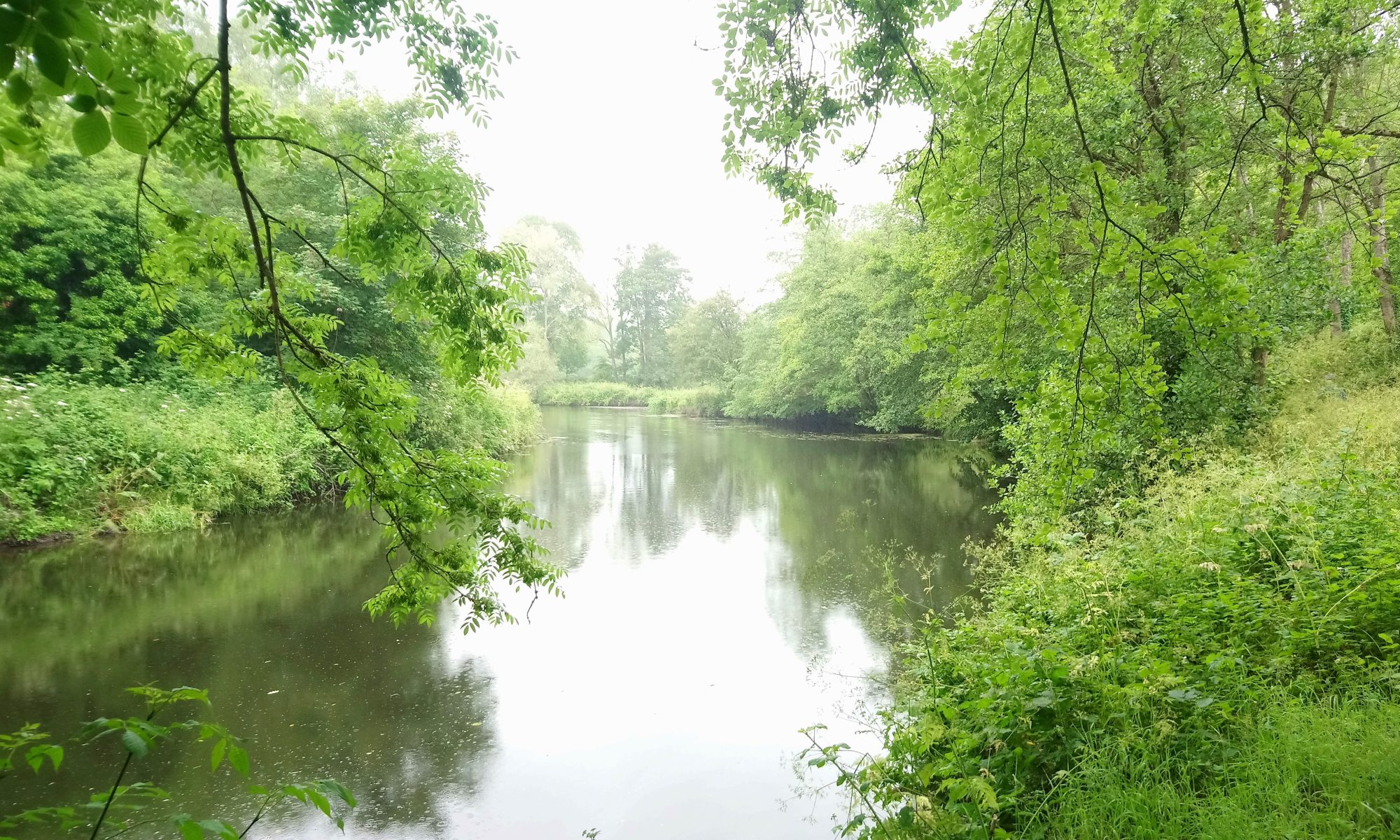

“the process of actively or passively assisting the recovery of an ecosystem in order to improve its structure and functions, with the aim of conserving or enhancing biodiversity and ecosystem resilience, through improving an area of a habitat type to good condition”
-Restoration as defined by Article 3 of the EU Nature Restoration Law 2024
The Nature Restoration Law recently had its full text published, so I am going to walk through an overview of the bill, article by article. First, I wanted to address some of the reactions to it first. This bill was hard fought for by its advocates and nearly equally fiercely opposed by its opponents. Bird Watch Ireland called it “a turning point for Europe’s nature and its citizens”. Michael Fitzmaurice, TD for Roscommon-Galway, called it a “black day for Ireland” and a threat to rural communities. I am not convinced either of these perspectives are accurate and certainly imbue this bill with power I don’t believe it to have.
For full transparency, I supported the introduction of the bill fairly publicly and contributed to the campaigns to argue for it. While I do fundamentally believe that it worth having, that does not mean I won’t be critical of its execution or implementation.
The Nature Restoration Law is an EU wide agreement that proposes to restore ecosystems, habitats and species across the EU’s land and seas, contributing to achieving the EU’s climate mitigation and climate adaptation objectives, and meeting international commitments. The introduction lays out 91 points of precedent, already existing laws, resolutions, and international agreements, such as the European Green Deal, Convention on Biological Diversity, Global Biodiversity Framework, UN Sustainable Development Goals, etc. The only part that is wholly new are the specific targets and land percentages, the Annexes and the requirements for Member States to make national restorations plans.
Articles 1 to 3 of the actual bill, deal primarily with definitions and scope. Article 4 presents the overarching targets, which is that by 2030, at least 30% of the total area of all habitat types listed in Annex I that are not in good condition are restored to good condition as a minimum. What’s been missed in some of the reporting on that target is that the 30% is of annex defined habitat that are in poor condition, not total European land area. Then those targets build to 60% by 2040 and 90% by 2050. The article suggests that member states should focus on the Natura 2000 sites for the first set of targets, further emphasising how this new legislation was building on what was already there. There are various common sense exceptions for targets in the face of natural disasters or public interest.
Article 5 sets out the same goals for marine ecosystems and article 6 encourages increased renewable energy use. Article 7 provides exceptions on the grounds of national defence, assumedly in case a member state has declared a certain kind of beetle as an enemy combatant. Article 8 has to do with restoring urban ecosystems specifically, halting their decline by 2030 and then attempting to improve trends from 2031 onwards.
That’s all fairly general and big picture, we get into more specific territory in articles 9, 10 and 11, especially for Ireland.
Article 9 “Restoration of the natural connectivity of rivers and natural function of the related floodplains” calls for an inventory of artificial barriers on waterways, removing obsolete barriers, improving the function of natural floodplains, and improving the natural connectivity of rivers and floodplains. This article is hugely important in the Irish context because, as discussed in Episode 4, waterway and flood management in Ireland in a shambles. There have been moves, independent to this, to have the Arterial Drainage Act 1945 completely reformed and to seriously challenge the current policies of the OPW regarding rivers and flooding.
Article 10 is the restoration of pollinator populations and this is a very simple section that basically just says, we need to deal with population decline. There’s nothing wrong with it but because of the scale of the bill and the fact that so much of ecosystem management is so local, it doesn’t really get into anything more specific. I assume that anything which included EU wide crack downs on certain herbicide and pesticide uses were vetoed during the negotiation stages.
Meanwhile, Article 11 “Restoration of agricultural ecosystems”, is to no one’s surprise, far more detailed. The very first section of this article throws a caveat over everything that comes after by stating that all restoration efforts need to take “into account climate change, the social and economic needs of rural areas and the need to ensure sustainable agricultural production in the Union.”
Then article 11 lays out a series of detailed steps including creating a grasslands butterfly index, a birds index, and again most relevant to Ireland a requirement to “restore organic soils in agricultural use constituting drained peatlands” up to 30% by 2030, 40% by 2040, and 50% by 2050. That is probably the most ambitious part of this entire bill.
Now article 11 also reads that: “The obligation for Member States to meet the rewetting targets […] does not imply an obligation for farmers and private landowners” However it has been, rightly, pointed out by critics of the bill that while initial targets might be reached with public land, eventually to comply with this legislation, the government will have to incentivise private landowners to volunteer to be part of the process. I’m going to discuss the concepts around those incentives before the end of this episode.
After this there is a lot to do with the logistics over the targets. Articles 14 to 19 are detailed outlines for what is required in a National Restoration Plan, while articles 20 and 21 explain the monitoring and reporting processes that go hand in hand with those restoration plans. Strangely, it’s here rather than in the targets that I found most of my issues. Well not strange really since I went into this expecting implementation to be the biggest roadblock, but still.
Right off the bat, this article has some of the worse examples of policy speak I’ve seen in a while. I do think there should be an editing stage where someone takes a red pen to any section that sounds like a generative AI model of other policy documents. This includes most uses of the phrase “sustainable development”, all uses of the word synergy, a world salad in article 14 section 3 that reads: “with regard to group 7 of the habitat types listed in Annex II, Members States shall set the percentage referred to in Article 5(1) point (d)” and then moves on like that was supposed to impart meaning.
Article 14 section 8 reads: “where applicable, determine the reduction of the extent of the rewetting of peatland under agricultural use, as referred to Article 11(4) fifth subparagraph” which is next to gibberish.
The problem, like with all the legislation that we’ve discussed so far on the podcast is capacity and enforcement. New targets are just marketing. While any EU law can be enforced by the commission by bringing a member state to the European Court of Justice. This is a lengthy and expensive exercise and should not be the first recourse. Ireland has been fined several times through this process and it has not improved the overall situation.
It is also pointless to set targets that there is no capacity to reach. In the Irish context the primary responsibility for the new targets, monitoring and reporting will fall to the NPWS. There is significant overlap in the reporting requirements of the Habitat Directive, the Birds Directive, the LIFE programme, the Convention on Biological Diversity, and this new law but on different timelines and with no recourse for synchronising or merging any of these reports to reduce the administrative workload on an already underfunded and over-stretched agency.
This, for my view, highlights the most important gap in the discourse surrounding this bill and similar environmental law in regards to labour. With significant increases to restored ecosystems, there will need to be an equivalent increase in employed rangers to monitor and oversee those ecosystems.
This also raises the ongoing issue of safeguarding rural communities. I would argue that if presenting alternative employment opportunities, a farmer retrains far more easily as a ranger than for most roles in tourism or hospitality. Some of the most relevant skills, maintaining fences, monitoring changes on the land, managing access and biosecurity, are all things farmers are already doing just with different end goals in mind.
The language around restoration often acts as though there will be no human role, or that any restitution to existing landowners will come only as being bought out or given grants and subsidies to do nothing on their land. That framing is insulting, unhelpful and inaccurate. But doing anything else would involve properly funding the NPWS to hire a lot more staff. We can all sit around saying people in rural communities should support this, but you know how you can make people care? You make it their job to care. Rather than asking farmers to plan their family’s financial security around complex bureaucratic grants the rules for which might change every five years, you create employment in rural communities, with all the protections and security that people should feel as public sector workers. Whether that security is all it should be, is a conversation for another time and place, but the fundamental issue here is how capacity is built and a whether “stakeholder engagement” is ever more than buzzwords for the odd public meeting or a leaflet through the door.
My interpretation of the Nature Restoration Law itself is simply that it’s a bit like a beefier sequel to the Habitat’s Directive. Habitats II: this time they mean business. That isn’t really a criticism since I think the Habitat’s Directive is one of our most important pieces of environment legislation, with the Birds Directive and Wildlife Act. I do think dramatic targets are largely marketing, but as someone who has worked in marketing before that isn’t really a criticism either. We need headlines and attention and public pressure to generate political will, because we need political will to prioritise these issues come budget season. The lack of trust in how implementation will be effect is one the most pressing issues that is not being addressed. It fundamentally adds to the polarisation of these issues and a harmful Us and Them attitude. The growing distrust in state structures far exceeds the fields of ecology or agriculture, as seen in the political unrest all over Ireland, but it’s one that environmentalists are not taking seriously enough.
Episode 8 Sources
Factsheet on Nature Restoration Law [link]
Lee, George (10 November 2023) ‘EU agrees on contested law to restore nature’ RTÉ
Meehan, Stella (17 June 2024) ‘Passing of Nature Restoration Law ‘monumental moment’’ Agriland
Ryan, Colm (13 November 2023) ‘Nature Restoration is a ‘defining moment for farming’ – Fitzmaurice’ Agriland
 Orla ní Dhúill