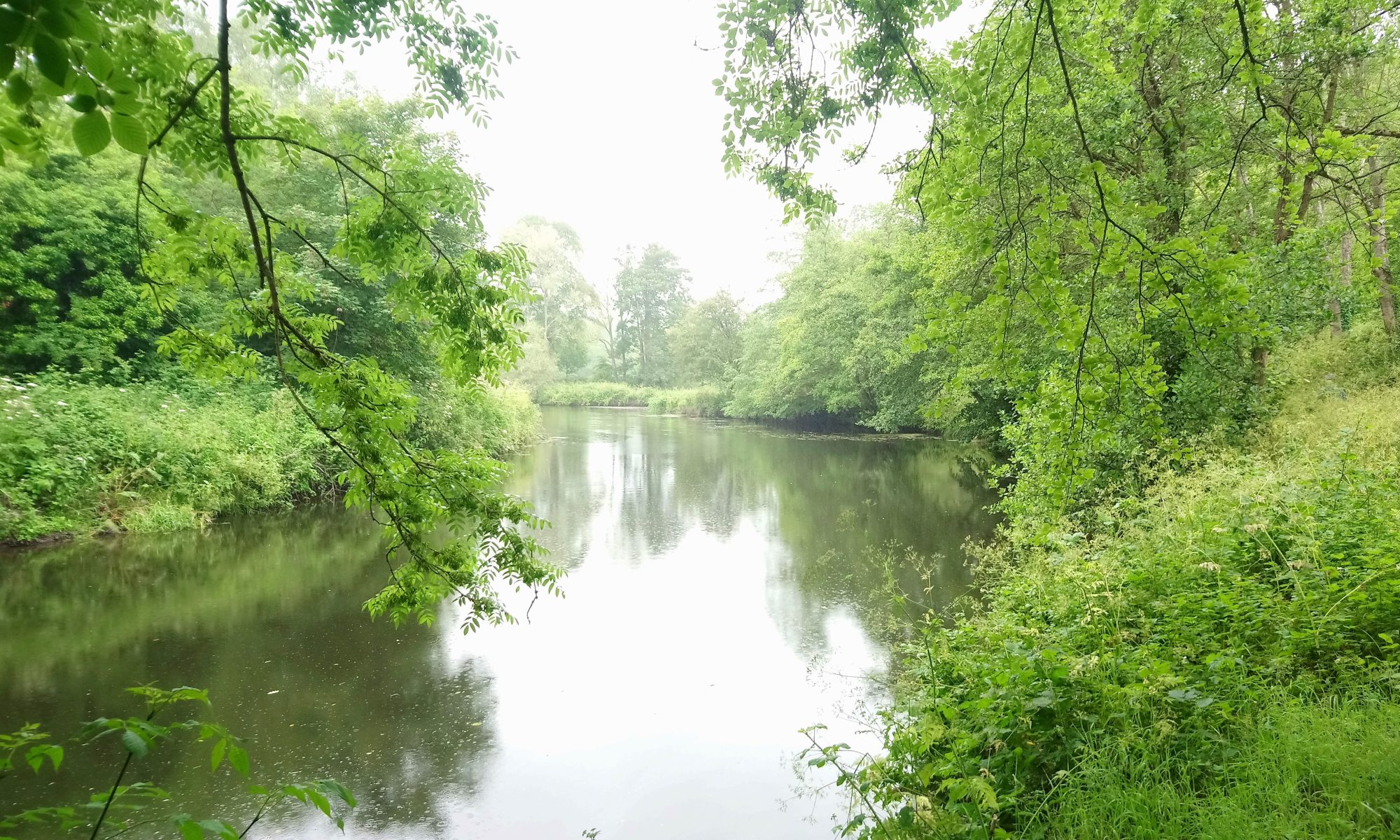
Cad a dhéainfimear fásta gan amhad? Tá deireadh na gcoillte ar lár;
níl trácht ar Chill Chais ná ar a teaghlach
is ní bainfear a clig go bráth.
From an Irish poem describing the clearance of woodlands from the Butler estate in Kilkash, Tipperary in the 18th century.
One of the most common ideas when it comes to the environment, forests, and climate change, is the idea that we just need to plant more trees, and that if we plant more trees we can solve all our problems at once. Unfortunately, tree planting, as a activity, can sometimes do as much harm as good when the goal is healthy ecosystems.
There are four main ways tree planting might not be the answer to a given environmental question; wrong trees, wrong place, wrong reasons, and biosecurity which I couldn’t make fit the pattern.
Wrong trees maybe seem obvious. The idea that it’s important to plant native trees has become more mainstream in recent years, but overwhelmingly it still isn’t being put into action. From huge forestry projects to small garden centres, the majority of trees are non-native species.
Part of the problem, is that many people don’t really understand what native species are or why that distinction matters. Generally speaking, we call a species native when it naturally occurred in a specific area without the interference of humans. This usually means that they have co-evolved with other species in these ecosystems and adapted over time to that region’s soils, weather, humidity, pests and diseases. There can be some disagreements over specific species, sometimes it isn’t clear how it arrived, in particular if it happened around the time of early human expansions. Sometimes there’s disagreements when a region went through some big change that altered the ecosystems radically, like the effect of the ice ages in Ireland that I discussed in the previous episode. For the most part, those disagreements only ever make the news or mainstream conversation when talking about animal reintroductions so we’re side-stepping it for this episode since we’re talking about trees specifically.
What trees are native in Ireland, is a lot less contentious and tends to only crop up when people argue over whether something like blackthorn is a tree or a shrub. There are around 26 native Irish tree species, give or take a few different sub-species and potential shrubs. But planting native goes further than just the species type, it’s about growing from seed stock gathered from existing trees in Ireland because those are the genetic variants best adapted to our environment.
The argument for letting trees reseed naturally by excluding the grazers and activities that stops them growing, is that it allows for an organic form of natural selection to choose which saplings succeed. It encourages trees that are well adapted to that hyper specific location to thrive.
There are also specific geographic situations in which planting trees is not appropriate. Planting on raised bogs for example, rather than rewetting peatlands, is generally not considered a good idea. Bogs are a complex ecosystem and valuable carbon store that should be protected in their own right, by leaving them undrained and uncut. Blocking drains around formerly harvested bogs has led to really impressive restoration around the country. The Irish Peatlands Conservation Council and the Communities Wetlands Forum are two groups that do a lot of work in this area, and you can find out more from them.
The mantra of needing the right trees in the right places has been taken up by a lot of advocates who have been campaigning against the spread of monoculture Sitka Spruce plantations in rural areas across the country.
So what’s the story with these plantations? As I’ve said before 11% of Ireland’s land area is considered to be covered in forest according to the Dept. of Agriculture, Food & the Marine. That’s around 770,000 hectares. Of that, 49.1% is in public ownership, mostly the state forestry agency, Coillte. Coillte’s forest holdings are 71.2% conifers and nearly three quarters of it less than 30 years old. Sitka spruce specifically makes up 44.6% percent of forest cover in the country, which is an insane monopoly for a single species to hold. [these figures are correct, in the audio I accidentally use the previous years figures which are slightly different]
I looked into the academic literature on whether sitka spruce planations negatively effect biodiversity outcomes but I won’t sit here reading them out to you. As always you can find the sources for this episode on fromtherootspod.com. One point from a 2017 article by O’Callaghan; Irwin; Byrne; & O’Halloran was that not only did native trees form woodlands that supports much larger and more diverse ranges of dependant species, but a woodland that generated naturally performed this task measureably than a planted woodland even of native species.
We know that monocultures generally are not good environmentally speaking and that goes for forestry just as much as other forms of agriculture. There are some token policies that mean some native broadleaf saplings get planted along an edge of the plantations, but it isn’t much. Sitka spruce is fast growing as tree species go and so can be harvested after 35 years, which is an impressive turn around for forestry. It’s also why such a big percentage of Ireland’s forest cover is less than 30 years old. Previously Coillte maintained the majority these plantations as complete monocultures, used significant about of pesticides and fungicides, and clear felled as soon as they’re mature. Leitrim has the highest forest cover in the country and communities there have been particularly outraged about the spruce plantations. Save Leitrim is a campaign that’s been in operation for several years now on the subject. It gained a lot of attention after there was a substantial mudslide where spruce had been planted on former cutaway bog, but has slipped back out of media focus in recent times.
Honestly I think I’ll need to come back to Coillte and the place commercial forestry holds in our environment and our economy in a separate episode to really do this topic justice. I will say that I think there are people within Coillte who have made some really positive changes to how their properties will be managed in the future, and forestry is complex, but a lot of damage has already been done.
So that addresses the idea of the wrong trees and the wrong places, but what about wrong reasons? Isn’t the potential effects more relevant than anyone’s motivation? Sometimes the intention, especially if it’s a wildly publicised intention can have all kinds of knock on effects. This is most notable with Carbon offsetting.
Carbon offsetting is a theory that claims people can compensate for their emissions of carbon dioxide by paying others to either reduce emissions or absorb CO2. The most common form of offsetting is tree planting. Healthy forests do naturally absorb CO2 as they mature. The process of capturing and storing CO2, like what happens in forests, is called carbon sequestration. The process of natural carbon sequestration in vegetation and the ocean have been disrupted heavily by human activities like pollution or deforestation or a vicious cycle of the knock-effects of climate change itself.
The appeal of “carbon offsetting” through reforesting is obvious. Restore forests and reduce atmospheric carbon at the same time, win-win.
One major issue with this approach is that it allows fossil fuel companies or carbon heavy industry claim that they will be “carbon neutral” without meaningfully reducing the rate at which they emit. The climate altering effects of “greenhouse gases” like carbon dioxide is brought on by those gases accumulating in the atmosphere once they’ve been released, they’re staying there. Forests on the other hand, sequester carbon at much slower and less predictable rates than it is being produced. Every forest is different and the amount of carbon stored and the speed at which it can be absorbed is highly variable.
The second issue with the offsetting model is longevity. Carbon released into the atmosphere remains there permanently, but forests only store carbon if they are allowed to mature and then are protected from destruction. The average tree, though there is huge variety species to species, can take up to 20 years to capture the amount of CO2 that is usually advertised in this schemes. Very few of the projects plan for plant mortality or have sufficient safeguards in place to protect and manage the site. A number of well-publicised wild fires in 2021 destroyed vast areas of forest that had been planted for the purposes of carbon offsetting.
New organisations appear every day offering more and more “affordable” forms of offsetting and many of them market themselves in wealthy countries and do their planting in poorer ones where there is significantly less oversight. This can make it difficult to distinguish the genuine efforts from the scams. I looked at those organisations operating directly in Ireland last year for an article I wrote that was published in the Irish Wildlife magazine.
There are about 14 prominent eco-branded organisations offering tree planting services to individuals and companies that plant within Ireland. It wasn’t possible for me to investigate groups that primarily operate outside the country.
Of those 14 Irish groups, half of them focus on mass tree planting as their main purpose or selling point, and another 2 use the language of carbon-offsetting specifically. Only 3 groups gave the protection or enhancement of biodiversity as their primary goal. This emphasis on planting as many trees as possible has resulted in short-term thinking in many places, the wrong trees being planted or being planted in locations with no plan for management and protection. As an example, 50% of the surveyed organisations either had no land they were specifically taking responsibility for long term or did not state the land acre in any public forums. Only 4 make their sites open to the public.
There’s also a huge amount of inconsistency in what’s called “carbon pricing”. The models for how you price offsetting carbon varies wildly internationally, if you search online you’ll find schemes offering you a tonne of carbon offset from $1 to $100 with little basis in real world costs. This part of the trend carries through in Ireland as well.
64% of the tree planting organisations price their services per tree and those prices range between €1 to €40. The lower end of that scale raises particularly pressing questions regarding the sourcing of their tree saplings. I reached out to the organisation offering €1 per tree to ask about where they sourced what they were planting and did not receive an answer.
To be perfectly frank, none of the Irish nurseries providing native bare root trees, grown from Irish stock that I know are likely to be able to produce at that price. And that’s ignoring all the other associated costs in running any project. That particularly organisation were not very forthcoming about they planting and a lot their photos were from the same location, same day, just posted over time with different filters and captions. I’m not in a position to tell you that this or any organisation is an intentional scam as opposed to just a bad idea, but it is why I advise caution to anyone who asks me about this kind of scheme.
It’s clear that some of these projects are relying on cheap trees imported on mass which is a serious concern for forest biosecurity. After the wrong trees, the wrong place, and the wrong intentions, biosecurity is my fourth and final way that a tree planting projects can do more harm than good.
Biosecurity is a blanket term used for measures taken to prevent the introduction or spread of harmful organisms, pests or diseases into a given region. This includes agricultural pests, invasive animal or plant species, and viruses such as, famously in Ireland, Foot and Mouth Disease. While the word is most commonly used to refer to plant and animal health, human health is also included. Failures in biosecurity has led to the spread of a number of diseases effecting forestry, most famously in recent years Ash Dieback. Department of Ag does have a Plant Health & Biosecurity Plan, which you can also find linked in my sources, that focuses on preventing similar pests or infection entering the country in future. Prevention is a lot easier than eradication. There hasn’t been much transparency from the department about those processes to date and that’s really necessary if we want things to improve.
I’ll talk more about biosecurity and invasive species in episode 6 because we’ve already covered so much ground in this episode.
I’m worried on one level that how I’ve presented this will come across very negative. It might seem pretty strange for someone who’s dedicated a good part of their life to talking about the importance of woodlands and forest ecology to tell people not to plant trees. Ultimately though, I think it’s not entirely negative if it gives us a pretty clear road map of what not to do.
Episode 3 Sources
- Coote; Dietzsch; Wilson; Graham; Walsh; Irwin; Kelly; Mitchell; Kelly; & O’Halloran, (2013). ‘Testing indicators of biodiversity for plantation forests’. Ecological indicators.
- Department of Agriculture, Food & the Marine (July 2023) Forest Statistics
- Department of Agriculture, Food & the Marine (November 2022) Plant Health & Biosecurity Strategy 2020-2025
- Ní Dhúill, Orla (2022) ‘Tree planting & carbon off-setting’ Irish Wildlife Winter 2022
- O’Callaghan; Irwin; Byrne; & O’Halloran (2017). ‘The role of planted forests in the provision of habitat: an Irish perspective’. Biodiversity and Conservation.
- Sweeney; Wilson; Irwin; Kelly; & O’Halloran (2010). ‘Are bird density, species richness and community structure similar between native woodlands and non-native plantations in an area with a generalist bird fauna?’. Biodiversity and Conservation
 Orla ní Dhúill