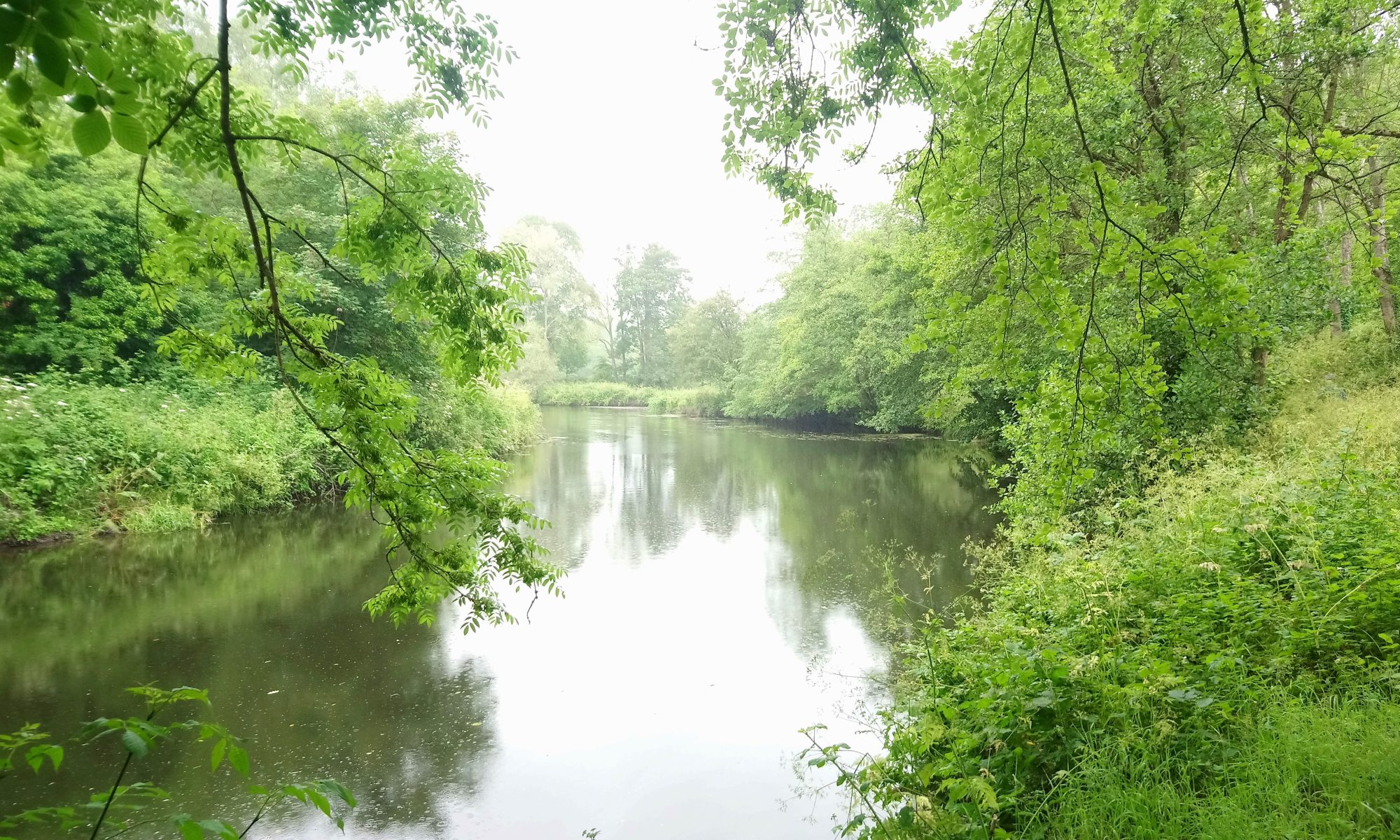

A hiding mane of a green-barked yew supports the sky; beautiful spot! the large green of an oak fronting the storm.
A tree of apples – great its bounty! Like a hostel, vast: A pretty bush, thick as a fist, of tiny hazelnuts, a green mass of branches.
A choice pure spring and princely water to drink: there spring watercress, yew-berries,
Ivy-bushes think as a man.
Around it tame swine lie down, goats, pigs,
Wild swine, grazing deer, a badger’s brood.
A peaceful troop, a heavy host of denizens of the soil,
Atrysting at my house: to meet them foxes come.
– An extract from The Hermit and the King, 10th century Irish poem translated by Kuno Meyer (1911)
When we talk about Ireland’s ecosystems and native species as we understand them today, we are only talking about the period after the last ice age. Before that point, the landscape of the island was radically altered during what is called the Last Glacial Maximum, when the ice sheets were biggest, between 26 and 20,000 years ago. Ireland would have been mostly covered in one of these huge ice sheets. Those ice sheets began retreating, shaping a lot of Ireland’s hills and valleys on their way to the sea and leaving behind tundra. Tundra is what we call the type of biome or environment similar to around the arctic that’s treeless and the subsoil mostly stays frozen. Vegetation stays low to the ground in those conditions, lichens and mosses playing an important part.
Around 13,000 years ago the first trees, like junipers, started to grow which might sound like a long time ago, but in ecological and geological terms this a short space of time. Birch, hazel and alders were also vital early pioneers of woodland until eventually forest is thought to have covered 80% of the island’s landmass.
Another effect of the melting glaciers was large lakes and bodies of still water left over in low-lying areas, in particularly the midlands, that would turn into the raised bogs that the midlands are so associated with. A combination of mud and silt on the bottom of those lakes formed a kind of seal that cut the lake off from the water table underneath. As vegetation in the lake became thicker, so did the layers of dead and dying organic material on the bottom, building up until the lake developed peat.
A lot of the plants that were involved in the early stages of forming raised bogs are still important wildflowers found across the country like water lilies, hornwort, meadowsweet, marsh-marigold, cuckooflower and bogbean.
The second main kind of bog in Ireland is blanket bog, which started to develop around 9000 thousand years ago. This landscape type is often attributed to early human settlers deforesting these areas, but it began to develop before that. Blanket bogs only happen in coastal upland areas with high rainfall. The Irish uplands at that time had a lot of what we call Scots Pine which thrives in poor soil so slowed the spread of blanket bogs. Neolithic farmers are thought to be at least partially responsible for the near regionally extinction of Scots Pine, which let blanket bogs spread.
Ireland’s peatlands are internationally significant, despite the fact we cut them up for fuel for hundreds of years, and also iconic to how Irish people picture our own landscapes. Peatlands are one of the most important carbon sinks and they help prevent flooding, which is why damage to them can have so many knock on effects.
The earliest human settlements found so far are in the north and the west coast of Ireland and date back to between 9 and 7,000 years ago. It’s important to recognise how little relative time the ecosystems of Ireland developed after the ice age before the arrival of humans. As well as contributing to the spread of blanket bogs, early farmers and their settlements also cleared land that would go on to create other iconic Irish habitats like heaths and semi-natural grasslands.
Written sources for Ireland don’t appear until the early medieval period, which again from the standard of the kind of geological time we’re discussing, is very recent. Many placenames, both in Old Irish and Norse, reference forests and trees. Like the tenth century poem I opened the episode with, the early Christian church in Ireland looked a lot to nature for its philosophical understandings of God. Take the story Saint Kevin sitting in the woods of Glendalough until the wild creatures came and settled around him. All this to say that Ireland was still seen as highly forested throughout the medieval period until at least the 15th century.
The first complete map of Ireland was the Down Survey carried out between 1655 and 1656. It was created in order to allocate land to soldiers who had fought for Cromwell in his 1649 invasion of Ireland. That map shows an Ireland with significantly reduced forest cover but with still woodlands in every country and in particular along waterways and rivers. Disappearing forest in that period meant the extinction of larger forest animals like wild boar and wolves and even the red squirrel, which was reintroduced from Britain in the late 19th century.
So what led to this deforestation? The simple answer is the need for agricultural land, but human history rarely lets simple answers sit. When discussing the impact of colonialism on the Irish landscape, the focus tends to be on timber felling for shipbuilding. The infamous East India Company established a shipyard in Cork around 1613. This comes across in a poem most Irish language speakers would know the first two lines of “Cad a dhéanfaimid feasta gan adhmad? Tá deireadh na gcoillte ar lár” which laments the destruction of woodlands on the Butler estate in Tipperary in the late 18th century. Certainly shipbuilding and colonial timber extraction played it’s part, but so did agriculture.
The question is whether that agricultural practise was equally influenced by colonialism as forestry. The style of colonialism practised in Ireland focused around what’s called “the big house”. An aristocratic landlord estate where one family held ownership over a large area of land and all the farmers were merely tenants. This not only meant that farmers were in a very insecure position because they didn’t have many rights to their own homes or land if there was a bad harvest and they couldn’t pay rent. Another sizable portion of the population were what’s called “landless labourers” who worked on the estates but subsisted off whatever they could grow in a small garden plot. This was in contrast with Britain where there was also an aristocracy and tenant farming, but farms were larger, and urban centres were more developed. These differences in development were deliberately fostered. Families getting by on subsistence farming uses land a lot less efficiently than fewer, larger farms feeding into villages and towns. By the 1800s Ireland a population of nearly 9 million so you can imagine the impact that would have on land use under that model.
In my mind, there’s a certain symmetry to the imperialism that led to the deforestation of Ireland and the imperialism that led to the famine. An Gorta Mór, meaning the great hunger is a period from 1845 to 1852. It’s well known that the decade of starvation, disease and mass emigration began with a series of failed harvests caused by potato blight and the callous disregard of the landlord system for its dying tenants. There is some debate among historians about just how much food continued to be exported from Ireland during that decade, but regardless of the figures, it was exported. More than just taking food out of the country though, it’s worth thinking about how that model of farming, pushing tenants onto worse land and less land, privileging large herds of estate owned grazing livestock or deer, created the conditions for that crisis in the first place.
So that by the turn of the twentieth century Ireland had both six million less people and 1% remaining forest cover.
I make these points because there often a drive in scientific fields to claim a separation between science and politics. Without a social, political understanding of Ireland’s history however, the ecological history is incomplete. Ignoring the impacts of humans on nature and of the natural environments on humans in disingenuous and, in this case I think, irresponsible.
Contemporary Ireland has a growing population again, but the distribution of that population is far more focused on urban centres. Agriculture is still one of the largest industries and the biggest impact on land use outside of those cities, both positively and negatively. Nearly every episode of this podcast will touch on agriculture in some way or other. The next episode comes back to the topic I’m most known for recently, forests and woodlands. Woodlands are vitally important for biodiversity, for carbon storage, for flood reduction and more than I will squeeze in here at the end, but it isn’t as simple as walking outside and planting trees anywhere and everywhere.
We have other fragile ecosystems that can be negatively impacted by artificial tree planting, there’s the contradictory policies in commercial forestry, there’s the issues of invasive species, pests and diseases coming on imported plants. Not to mention people running scams in the name of carbon off-setting.
Episode 2 Sources
Cabot, David (2018) Ireland: A natural history
Fogarty, Pádraic (2017) Whittled Away: Ireland’s Vanishing Nature
Kinealy, Christine (1997) ‘Food Exports from Ireland 1846-47’ History Ireland Volume 1 Issue 5
Otte, Marinus L. (2003) Wetlands of Ireland: Distribution, ecology, uses and economic value. University College Dublin Press.
 Orla ní Dhúill