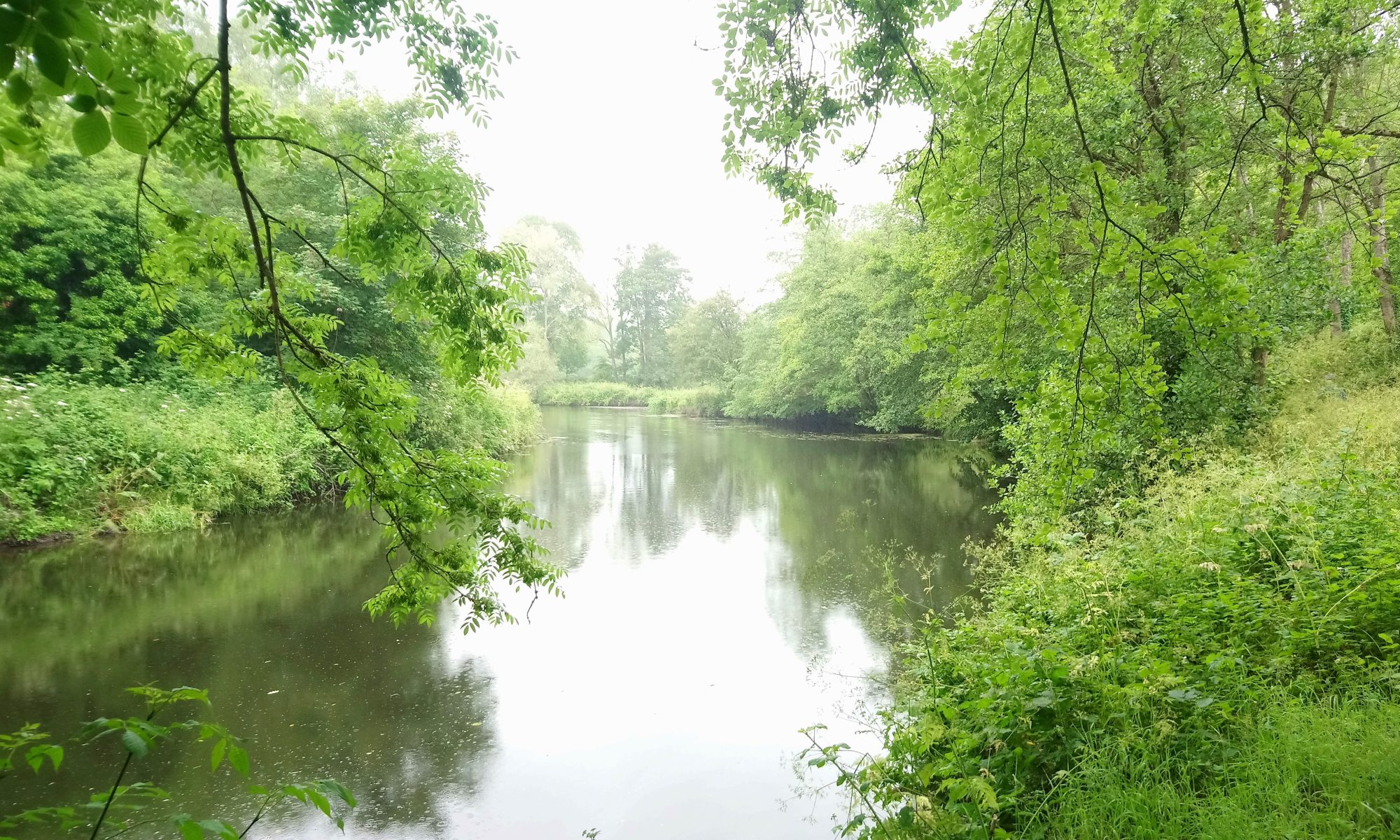

“I close my eyes and picture the emerald of the sea, from the fishing boats at Dingle to the shores of Donaghdee. I miss the river Shannon and the folks at Skibbereen, the moorlands and the meddle with their forty shades of green.”
Johnny Cash’s fond description of Ireland as a particularly green country wasn’t the first or the last. Irish people often take a lot of pride in our landscape, but how green are we really? That was why I chose to use it to open my podcast From the Roots.
Ultimately the goal for the podcast is to demystify the science and figures in Irish environmental news stories and to give the necessary background for you to understand them… in fifteen minutes or less, or your money back. I think that keeping things short, specific and accessible is important increasing people’s understanding of the complex issues we’re facing.
The opening chapter to Pádraic Fogarty’s book on Ireland’s vanishing nature, Whittled Away, is titled ‘not as green as we’d like to think’ and challenges the reader on the idea of shifting baselines. The phrase shifting baselines is used a lot in wildlife and earth sciences to explain how our perception of a situation changes based on what we know to measure it against. We see this in the hills and uplands of Ireland that have been overgrazed for so long that most people have no idea how artificial that lack of plant life is. It’s natural trap into. If you don’t know what is supposed to be there, how are you supposed to know that it’s gone? Similarly, if we don’t know where we are at today, we can’t meaningfully make plans for where we want to go.
So how does Ireland stand environmentally speaking?
Well, Ireland ranks one of the lowest countries in Europe for forest cover, at just 11.4% in 2020 according to our own Dept. of Agriculture. The average in the EU 27 is 38.8% and some of our only neighbours that rank below us are Iceland, Malta and the Vatican. The fact that this level of cover is a dramatic reduction from the natural ecosystems of Ireland is discussed more in episode two. Worse still, of that 11.4% forest cover, only between 1 to 2% of it is native broadleaf woodland. The rest is primarily conifer plantations like the controversial Sitka Spruce plantations that you might have heard mentioned. That will get it’s own discussion in episode 3 on tree planting.
The main agency responsible for biodiversity, species and protected areas like nature reserves is the National Parks and Wildlife Service (NPWS). While they’re an organisation set up under national law, they also are responsible for a lot of Ireland’s Europe wide environmental commitments. A lot but not all of Ireland’s environmental law comes from the EU. This gives an outside checks and balance system to our performance. Episode 5 will focus in on the legal structures and state agencies that Ireland has around the environment. The only piece of all that legislation I’ll mention here is the Habitat’s Directive which lists various protected habitats, like wetlands or broadleaf forest, and protected animals, like otters. This Directive requires the NPWS to report the status of listed habitats and species every six years.
According to their last survey in 2019, 85% of protected habitats in Ireland are in an inadequate or bad condition. 46% of those habitats are considered to still be declining in health and only 2% of protected habitats in Ireland are thought to be improving. They list agricultural as the largest threat to and pressure on habitats in Ireland, that’s to be expected in a country with so much agriculture. The second highest threat is invasive species, a topic that doesn’t get enough attention, that I’ll be coming back to in episode 6. Protected species are doing slightly better, with 57% of monitored species in good standing and 55% of those populations listed as stable. There’s a lot of missing data though, because this kind of monitoring is sorely underfunded in Ireland.
Water quality is also a concern. The Environmental Protection Agency (EPA) did an assessment of Irish waterways between 2019 and 2022 that stated that only 56% of rivers were in what they classify as a good or satisfactory biological condition. Of the 44% considered to be in unsatisfactory or bad conditions, the two major pollutants were nitrates and phosphates, which usually indicates run-off from agricultural fertilizers. 40% of rivers have unsatisfactory levels of nitrates and 28% with phosphates. There are similar figures for lakes. Over a third of Irish lakes have too much phosphorus in them.
Just in the last month there have been stories about toxic algae blooms in lakes that required national health warnings to keep people and animals away. One was in Killarney, one of Ireland’s six national parks, and the other was Lough Neagh, Ireland’s largest lake. In both cases the algae blooms are connected to phosphate pollution from farm run-off and from human effluent from badly managed waste treatment. Two lakes at opposite ends of the island that both suffered from poor management despite plenty of warnings over the years. In fact, Ireland has been fined more than once by the EU because of a failure to meet agreements about septic tank regulation. Our coastal waters fare slightly better with only 20% in unsatisfactory conditions.
There are a lot of ways to measure our performance on climate change. One is the Climate Change Performance Index, an independent monitoring tool published once a year that ranks countries performance on climate action. Until this year Ireland was ranked 46th and we recently rose to 37th in the world. This still leaves us among the worst performers in Europe. A lot of that is down to there being no shift in regards certain agriculture policies, like promotion of nitrogen fertilizers like I mentioned in regards water. Pollutants rarely only have one impact and so nitrogen fertilizers are getting their own discussion in episode 4. The rest is down to our emissions per capita, meaning per person.
When the term “emissions” is used, that’s referring to what used to always be called Greenhouse Gas Emissions and sometimes still is or just GHG emissions. More and more recently there’s been a shift towards saying carbon emissions. Carbon dioxide is the most common greenhouse gas, but it is not the only one. If there are actual figures involved it’ll usually measure emissions per ton of carbon equivalent. That converts other greenhouse gases that may have a stronger or lesser greenhouse effect than CO2 into how much carbon it would take to cause the same impact. This sounds complicated but it’s meant to give people a simpler number to focus on and track change over time.
Ireland’s carbon equivalent emissions per capita peaked in 2000 with just over 20 tons per person. 20 tons sounds like a lot, because it is. Our emissions have been falling since then but nowhere near at the rate promised to the Paris Agreement. Emissions fell to 13.3 tons in 2021 but the Paris compatible target for that year was 8.5.
What is the Paris Agreement?
The Paris Agreement is an international treaty that was created under a UN convention from 1994 called the United Nations Framework Convention on Climate Change, that is usually referenced in documents as the UNFCCC, which is obviously very catchy.
As a side note, a theme we’re going to hit in this podcast again and again is how much international organisations love initials and acronyms. The UN in particular is wild for them and has little to no interest in whether a human being could possibly remember or say them.
The thing about UN conventions though, whether you can management the acronym or not, is that they tend to be big picture and very hard to enforce. A lot of international law operates on an honour system so it can take a lot of public attention for the pressure of these conventions to really take effect. Because UN conventions are not overly public friendly even when they aren’t called things like UNFCCC, you can see why this might be a problem.
Back to Paris. In December 2015, there was an event called COP21. COP is another acronym meaning Conference of Parties. It was the 21st conference of the parties of the UNFCCC, so at least COP is easier to say. At COP21, 196 countries agreed to a document with the overarching goal that I’ll quote as to hold “the increase in the global average temperature to well below 2°C above pre-industrial levels” and pursue efforts “to limit the temperature increase to 1.5°C above pre-industrial levels.” It’s that treaty that people are referring to when you hear them say the Paris goals or emission targets.
Ireland is signed up to reach those targets by 2030, a year that seemed very distant to me, and probably law-makers, in 2015, but is now rapidly approaching. So unfortunately, the Environmental Protection Agency said in June that their in expert assessment of all currently planned climate policies and measures, Ireland will fall well short of Paris targets.
I won’t go into details about the rest of these conventions here, after the slog of the Paris Agreement, because we’ll come back to that in episode 5. But hopefully that gives you a sense of how the international community talks about environmental law and climate action and an indication why it isn’t something that people who aren’t embedded in that conversation tend to pick up casually.
At the beginning of September, a legally focused environmental NGO called Friends of the Irish Environment announced that they are taking a court case against the government, claiming that the current Climate Action Plan as written falls short of the government’s obligations to emissions reduction. Friends of the Irish Environment previously won a Supreme Court case against the government along similar grounds. The then National Mitigation Plan was ruled too vague to meet the 2015 Climate Act.
Their case is built around the Climate Act of 2015 and not the Paris Agreement which was ratified by the Oireachtas the following year. Like I said, international law is hard to enforce beyond public shaming and Ireland’s commitments to the Paris Agreement are largely managed through EU law which is it’s own complication that again I’ll put off for episode 5. While the goals of the Climate Act are less ambitious and have a timeline up to 2050 instead of 2030, there has been a history of environmental policies based in national law being given more weight when it comes to enforcement. The case was given leave to proceed by the High Court and will start on November 6th.
If you’re still with me after all that, congratulations. I try to make sure I have plenty of verifiable sources for each episode, academic, legal, journalistic, so you can read more deeply if you’re interested or just check that I have my facts straight. I’m generalist and so it’s always possible I could misrepresent the nuance of something more specialist.
I’ll embed the first episode of From the Roots belong. It’s available through all the usual formats. I original was going to keep the podcast business on it’s own website, but it just makes sense for me to keep my work together.
Episode 1 Sources
Community Law and Mediation (September 2023) ‘Climate Action Case’
Environmental Protection Agency (June 2023) ‘Ireland projected to fall well short of climate targets’
Environmental Protection Agency ‘Current Trends in Water’ (accessed 5 September 2023)
Fitzgerald, Cormac (5 September 2023) ‘Irish environmental group takes legal action against Government over climate plan’ The Journal
Fogarty, Pádraic (2017) Whittled Away: Ireland’s Vanishing Nature
Government of Ireland (2015) Climate Action and Low Carbon Development Act 2015
NPWS (2019) The Status of EU Protected Habitats and Species in Ireland. Volume 1
Nulty, Fiona (2023) ‘A biodiverse baseline’
RTE (6 September 2023) ‘Warning after algal bloom found on Killarney lake’
United Nations (2023) What is the Paris Agreement?
United Nations (2016) Report of the Conference of the Parties on its twenty-first session
United Nations (1992) United Nations Framework Convention on Climate Change
 Orla ní Dhúill